KB Antiques & Watches
Kangxi Style 19th Century Chinese Vase & Carved Stand
Kangxi Style 19th Century Chinese Vase & Carved Stand
Couldn't load pickup availability
This elegant antique Chinese blue and white gu-form vase, inspired by the celebrated Kangxi period of the Qing dynasty, is a striking example of 19th-century craftsmanship rendered in the revered early Qing style.
Beautifully proportioned in the classic trumpet-shaped gu silhouette, the vase is exquisitely hand-decorated in rich cobalt blue underglaze. The finely painted scene depicts graceful pheasants poised amongst blossoming flowers and weathered scholar’s rocks—traditional symbols of beauty, refinement, and harmony in Chinese art. The detailing is exceptionally well executed, with delicate brushwork bringing depth and vitality to the plumage and botanical elements, reflecting the enduring influence of Kangxi-era artistry.
The base bears a four-character Kangxi mark in underglaze blue. While stylistically honoring the Kangxi reign (1662–1722), the vase dates to the 19th century, when potters continued to pay homage to earlier imperial wares through faithful stylistic revivals.
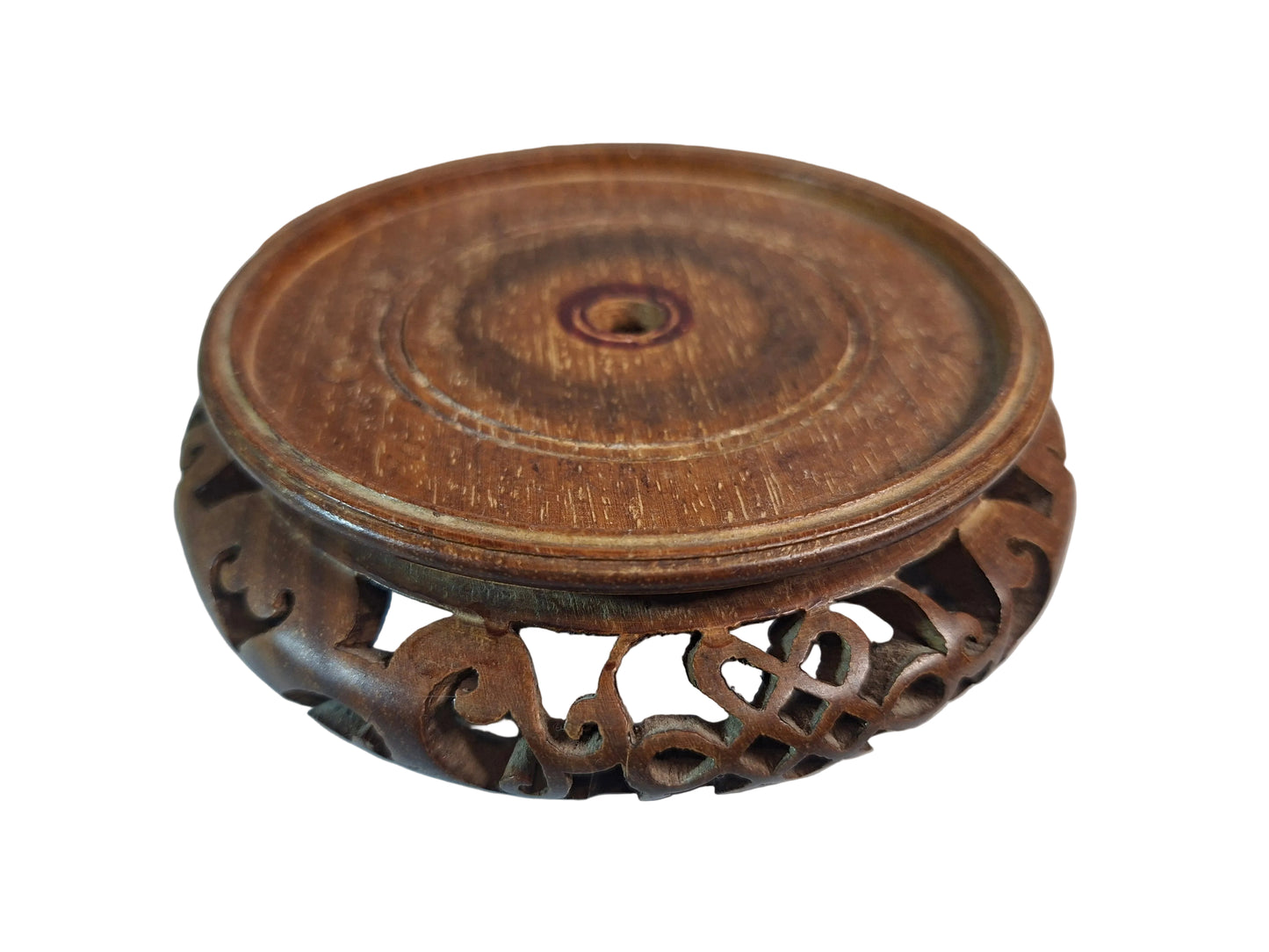
The piece is presented on an intricately carved hardwood stand featuring the Buddhistic “Everlasting Knot” motif, a symbol of eternity and interconnectedness. The stand complements the vase beautifully, enhancing both its presence and cultural resonance.
CONDITION : This Vase Has Professional Restoration To the Top ( See Photos For Full Description )
Height : 29cm ( With Stand ) 25cm ( Without Stand )
CHINESE PORCELAIN
19th-century Chinese blue and white porcelain continued a long-standing ceramic tradition that had flourished since the Ming dynasty, but it evolved in response to both domestic demand and expanding global trade during the Qing Dynasty. Produced primarily in the imperial kilns at Jingdezhen, these wares were decorated with cobalt blue designs painted under a clear glaze, maintaining the classic aesthetic that had made Chinese porcelain famous worldwide.
During the 19th century, production increased to meet export markets, especially in Europe and America. Designs often blended traditional Chinese motifs—such as landscapes, floral patterns, and mythological scenes—with forms and patterns tailored to Western tastes. This period also saw a wider range of quality, from finely made imperial pieces to more commercial wares intended for mass export.
Despite political and economic challenges, including internal unrest and foreign pressures, Chinese kilns continued to produce large quantities of blue and white porcelain. While some decline in technical refinement is noted compared to earlier periods, 19th-century pieces remain valued today for their decorative appeal and as reflections of a dynamic period of cultural exchange and global trade.